This is default featured slide 1 title

Go to Blogger edit html and find these sentences.Now replace these sentences with your own descriptions.This theme is Bloggerized by Lasantha Bandara - Premiumbloggertemplates.com.

This is default featured slide 2 title

Go to Blogger edit html and find these sentences.Now replace these sentences with your own descriptions.This theme is Bloggerized by Lasantha Bandara - Premiumbloggertemplates.com.

This is default featured slide 3 title

Go to Blogger edit html and find these sentences.Now replace these sentences with your own descriptions.This theme is Bloggerized by Lasantha Bandara - Premiumbloggertemplates.com.

This is default featured slide 4 title

Go to Blogger edit html and find these sentences.Now replace these sentences with your own descriptions.This theme is Bloggerized by Lasantha Bandara - Premiumbloggertemplates.com.

This is default featured slide 5 title

Go to Blogger edit html and find these sentences.Now replace these sentences with your own descriptions.This theme is Bloggerized by Lasantha Bandara - Premiumbloggertemplates.com.

Rabu, 31 Agustus 2011

Ebook Download The Toyota Way to Lean Leadership: Achieving and Sustaining Excellence through Leadership Development, by Jeffrey K. Liker Gary L. Convis

Ebook Download The Toyota Way to Lean Leadership: Achieving and Sustaining Excellence through Leadership Development, by Jeffrey K. Liker Gary L. Convis

Locate countless book categories in this site. As one of one of the most seen website, we constantly offer the very best point. Among them is The Toyota Way To Lean Leadership: Achieving And Sustaining Excellence Through Leadership Development, By Jeffrey K. Liker Gary L. Convis This is one of the most referred books from us to provide for you. The analysis book will be always the motivating book not just for the people that over this topic yet additionally others. To recognize just how specifically this publication will reveal you can follow more details below.
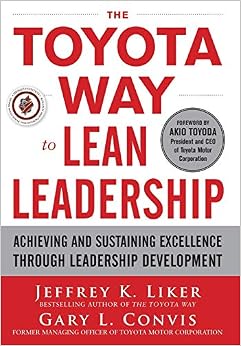
The Toyota Way to Lean Leadership: Achieving and Sustaining Excellence through Leadership Development, by Jeffrey K. Liker Gary L. Convis

The Toyota Way to Lean Leadership: Achieving and Sustaining Excellence through Leadership Development, by Jeffrey K. Liker Gary L. Convis


The Toyota Way to Lean Leadership: Achieving and Sustaining Excellence through Leadership Development, by Jeffrey K. Liker Gary L. Convis


Ebook Download The Toyota Way to Lean Leadership: Achieving and Sustaining Excellence through Leadership Development, by Jeffrey K. Liker Gary L. Convis

If you have actually been able here, it implies that you have the ability to type as well as link to the net. Once again, It means that internet turns into one of the service that could make simplicity of your life. One that you can do now in this collection is also one part of your initiative to boost the life high quality. Yeah, this website currently gives the The Toyota Way To Lean Leadership: Achieving And Sustaining Excellence Through Leadership Development, By Jeffrey K. Liker Gary L. Convis as one of products to review in this recent era.

When you feel tough to get this book, you could take it based on the web link in this article. This is not just regarding just how you obtain the book to read. It has to do with the essential thing that you can gather when remaining in this world. The Toyota Way To Lean Leadership: Achieving And Sustaining Excellence Through Leadership Development, By Jeffrey K. Liker Gary L. Convis as a fashion to realize it is not given in this internet site. By clicking the web link, you could find the brand-new book to check out. Yeah, this is it!

Guide is a book that can assist you locating the reality in doing this life. Additionally, the advised The Toyota Way To Lean Leadership: Achieving And Sustaining Excellence Through Leadership Development, By Jeffrey K. Liker Gary L. Convis is also written by the specialist author. Every word that is provided will certainly not worry you to assume approximately. The means you like analysis could be begun by an additional book. Yet, the method you have to review publication time and again can be started from this favored book. As reference this book likewise offers a much better principle of how to attract individuals to read.

Interested? Certainly, this is why, we expect you to click the web link page to go to, and afterwards you could enjoy guide The Toyota Way To Lean Leadership: Achieving And Sustaining Excellence Through Leadership Development, By Jeffrey K. Liker Gary L. Convis downloaded till finished. You could save the soft data of this The Toyota Way To Lean Leadership: Achieving And Sustaining Excellence Through Leadership Development, By Jeffrey K. Liker Gary L. Convis in your gizmo. Certainly, you will bring the gadget everywhere, will not you? This is why, each time you have spare time, each time you could delight in reading by soft copy publication The Toyota Way To Lean Leadership: Achieving And Sustaining Excellence Through Leadership Development, By Jeffrey K. Liker Gary L. Convis

The Toyota Way to Lean Leadership: Achieving and Sustaining Excellence through Leadership Development, by Jeffrey K. Liker Gary L. Convis

Review

Thank you, and Mr. Convis, for sharing the "The Toyota Way to Lean Leadership," it is my favourite book of 2011. It has become a work-book for me and I am sure to learn many more lessons from it on my journey.  --Marius de Beer, PAM

Read more

From the Back Cover

"The Toyota Way to Lean Leadership will immediately be recognized as the most important book ever published to understand and guide "True North Lean" and the goal of perpetual business excellence. The book clearly describes altruistic leaders, concerned with the interest of others, and process vs. individual focused leadership as required ingredient's of Lean." Ross Robson, President & CEO, DnR Lean & Ex. Director, Shingo Prize (retired)"This great book by Dr. Liker and Gary Convis reveals the secret ingredient to lean success: lean leadership. Not only is it a pleasure to read, but it is also deep and enlightening. This book is an absolute must read for anyone interested in lean: it's both an eye opener and a game changer. It will transform how you think about lean, and open the way to spectacular results in your job."Michael Ballé, PhD, co-author of The Gold Mine and The Lean Manager

Read more

See all Editorial Reviews

Product details

Hardcover: 320 pages

Publisher: McGraw-Hill Education; 1 edition (November 7, 2011)

Language: English

ISBN-10: 0071780785

ISBN-13: 978-0071780780

Product Dimensions:

6.5 x 1.2 x 9.2 inches

Shipping Weight: 1.2 pounds (View shipping rates and policies)

Average Customer Review:

4.7 out of 5 stars

78 customer reviews

Amazon Best Sellers Rank:

#69,617 in Books (See Top 100 in Books)

This book leaps ahead of over 30 books I've read on lean/business excellence. Here's some thoughts and opinions, potential pro and con, for you to maybe consider...Pro:+ Topic is spot on: It's all about leadership+ Describes what leadership is, and how to create more of it ("shu ha ri" which is Toyota's apprentice / Socratic Method model)+ Answers common questions (can lean be copied by Western companies, how do I sustain gains)Con:- Would prefer more specific science from a wider pool of authors; credibility would benefit from citing more studies- Some the figures and tables are not as well constructed and/or informative as I would have hoped- Indirectly refer to workers as being at the bottom and leaders at the top despite periodically emphasizing the opposite - a mixed message that I hope they fixNeutral:> Neither verbose, nor concise - sort of an in betweenBottom line: Highly recommended, 5 stars. Hard to put down once I started reading it. Don't let 3 pro and 3 con dissuade you from getting this book; this book really gets to the heart of, "Why is lean so hard to copy?" The short answer they provide is that it can't because it must be created. Superb!

Gary Convis, is the senior American leader of Toyota's "NUMMI Miracle"--the transformation of General Motors worst plant to its best plant in just two years; Toyota's top North American manufacturing executive, Toyota Motor Corporation's first non-Japanese Managing Officer, and brilliant CEO of Dana Corporation who--adapting the Toyota Way to this global auto supplier, led them from the brink of bankruptcy in the depths of the Great Recession to prosperity and significant competitive advantage. You will find his clear and logical explanations of how he led his people and organizations to overcome challenges, build capability, create world-class competitive advantage to satisfy customers to grow a business extremely valuable, no matter what your leadership role.

It's a dry book - but the content is conveyed in a perfect manner. You get the story of what Lean actually is - and that is not fancy spreadsheets, buzz-words, or process mapping. It's the method and mentality of how you run your business and shape your culture. The examples are great, and the you should get the point that just because Toyota did it this way, doesn't make it a cut and paste fit for other businesses. Take that away and it should be good

This is the 4th installment in Liker's Toyota way series (at least how I read it)This covers one of the last Ps in LEAN: People. To me the 4 Ps are all interconnected, people determines the philosophy which determines the purpose and processes. Some parts are repetitive, but it's still well worth the money. The best is still the original Toyota way, more operational and down to earth

The book is great and if you are dedicated to change as per the roadmap in the book I will indeed change the way you do things on your factory floor

I have read this several times and now want to work for Toyota!I try to apply the principles at work.It is a good, easy read and VERY informative.I even bought the overpriced Kindle version so it would be easier to cite for my next college paper.

Good item. However, it is an MP3. I had hoped for a CD. However, the book is a good one. Good swift shipping.

*What we appreciate*- The book provides missing link to fully understand how a lean organization is built up, nurtured and continuously improved. Simply speaking, you cannot say lean organization without saying lean leadership. Through a balance of theory, practical steps and story telling, Liker & Convis describe the essential ingredients for organizations to prosper in the decade to come. It is an easy read, with concepts that challenges thinking of most contemporary businesses, and once you start thinking of the implications, it even challenges your individual contributions to the world of work.- Confirmation that the five values that define Toyota Way: spirit of challenge, Kaizen, genchi genbatsu (go and see to deeply understand), teamwork, and respect, do not automatically result in leadership. Trust is an essential, if not the key, element of leadership. Hard cuts, though sometimes inevitable as the Dana case study shows, must be a last resort.- Liker & Convis offer a clear explanation of Toyota's leadership development model. Basically, this model consists of 4 levels: (1)commit to self-development, (2) coach and develop others,(3) support daily kaizen, (4) create vision and align goals. We see the importance of "True North" as overarching vision, which is central to decision making. We see the importance of lean leadership throughout the hierarchy, a need for shared responsibility according to expertise and the concept of leadership as a team sport. Last but not least, we see the importance of first line managers to provide a role model for the behavior they want to see in place.- The Toyota Way focuses on culture of leadership rather than metrics or processes, and links the cultivation of leadership, as a leader's primary responsibility. Personally, we were especially impressed by the ways Toyota dealt with its triple crisis (recession, recalls due to technical problems, earthquake & Tsunami). Although facing severe economic problems, the company resisted the temptation to "manage" the crisis by layoffs and used this it as an opportunity to learn and improve instead. In Liker's words: "The recommended solution to these problems wasn't fundamental change but increased attention to fundamentals." This also underscores the interconnection between corporate culture, strategy, and leadership. In other words: attention to culture and leadership is not optional as both have strong impact on the company's business value and success.- Acknowledgement that not all individuals are predisposed to leadership and that an enabling environment is not enough. An emphasis on self-development, a passion to learn and grow in pursuit of mastery. What we appreciated most was the emphatic exclusion of quick fix solutions and the repeated emphasis on ensuring you start with the right people and deliberately grow leaders from there. Progress is discussed in terms of decades, not even years and definitely not in months. This underscores the long-term if not life-long commitment required to grow a lean organization. If there is a recipe for Toyota's success, according to Liker & Convis "it is a deep, time-consuming, and expensive investment in developing everyone in the organization, and truly believing that your employees are your most precious resource."- Valuable reference points and benchmarks of lean leadership presented in a way that encouraged us to think "how would we have behaved in that situation," which is an enriching exercise even if you are well versed in the values and principles of lean leadership.*What we ask ourselves*- Is leadership still privilege of line management? There are some hints towards leadership as a team sport but it is not fully explored. Isn't there more interplay between coaching employees and receiving feedback from them, aligning and developing yourself by helping others, getting fresh impulses for your vision?- What are the risks or downsides of lean leadership? What could be a potential pitfall to lead in a lean way? How do lean leaders cope with conflicts fostered by fear as much as denial? Does "Toyota Way" necessarily mean there is no disagreement let alone resistance at all?- How does it work in other areas than the automotive industry? Are the case studies of lean leadership outside of Toyota? What about the broader context of economic turbulence? Is the Toyota Way to be applied anytime anywhere? Does it guarantee infinite success?- How we can truly recognize culture in all its dimensions and how would existing cultures map, over time, to lean leadership? Where to start when an organization and its management are not lean yet? What exactly is the path that leads us from traditional command-and-control to lean management?- Where does the broader context of management, its improvement and renewal fit into lean leadership, as discussed by other authors such as John Kotter, Henry Mintzberg, Stephen Denning, Seth Kahan?- How do employees perceive and experience lean leadership? Clearly not all employees are destined to be lean leaders, and some that are, will not be on an "accelerated" path. How do lean leaders position themselves relative to employees, and how do they draw on the potential and insights of employees?- How many organizations would have the capacity and appetite to embark on a journey of lean leadership? It feels to us there is an intermediate step that is buried in Toyota's past that we are not privileged to. Liker & Convis however state that you should be able to reach it in 10 to 30 years. Is that a realistic, let alone attractive option for organizations which face an average life-expectancy of less than 20 years?*What we got out of the book*- A stark reminder that true leadership is an essential yet endless, time-consuming and expensive commitment that regresses the moment you stop injecting energy.- There are no quick fixes and no recipes. Even with lean leadership baked into the culture of Toyota, they still have to pay constant attention to its development.- The true depth of concepts, like Kaizen and gemba walks, that have been watered down through poor interpretation.- The significant relationship and context required when coaching leaders.- Respect for people, not as a gentle approach but offering constant challenges to encourage individuals and teams to reach beyond their comfort zone. Respect must not be an excuse for letting things go. As Akio Toyoda puts it in his foreword: "If we do not give people accurate feedback based on real behavior they are not growing and we are not respecting them."- A benchmark for what investment in people can be.- When selecting people, mindset and culture are more important than skill.Joint review: Dr. Siegfried Kaltenecker and Marius de Beer

The Toyota Way to Lean Leadership: Achieving and Sustaining Excellence through Leadership Development, by Jeffrey K. Liker Gary L. Convis PDF
The Toyota Way to Lean Leadership: Achieving and Sustaining Excellence through Leadership Development, by Jeffrey K. Liker Gary L. Convis EPub
The Toyota Way to Lean Leadership: Achieving and Sustaining Excellence through Leadership Development, by Jeffrey K. Liker Gary L. Convis Doc
The Toyota Way to Lean Leadership: Achieving and Sustaining Excellence through Leadership Development, by Jeffrey K. Liker Gary L. Convis iBooks
The Toyota Way to Lean Leadership: Achieving and Sustaining Excellence through Leadership Development, by Jeffrey K. Liker Gary L. Convis rtf
The Toyota Way to Lean Leadership: Achieving and Sustaining Excellence through Leadership Development, by Jeffrey K. Liker Gary L. Convis Mobipocket
The Toyota Way to Lean Leadership: Achieving and Sustaining Excellence through Leadership Development, by Jeffrey K. Liker Gary L. Convis Kindle
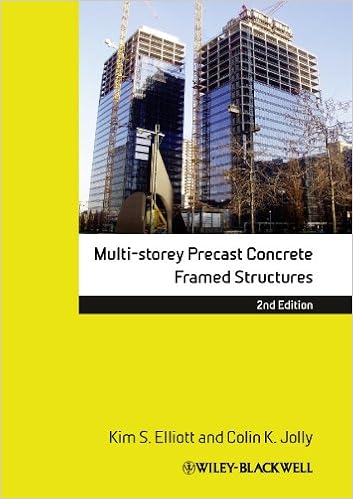
The Toyota Way to Lean Leadership: Achieving and Sustaining Excellence through Leadership Development, by Jeffrey K. Liker Gary L. Convis PDF

The Toyota Way to Lean Leadership: Achieving and Sustaining Excellence through Leadership Development, by Jeffrey K. Liker Gary L. Convis PDF

The Toyota Way to Lean Leadership: Achieving and Sustaining Excellence through Leadership Development, by Jeffrey K. Liker Gary L. Convis PDF

Download PDF Multi-Storey Precast Concrete Framed Structures

Download PDF Multi-Storey Precast Concrete Framed Structures

Book tends to be the home window to world, as exactly what many people say. However, book will certainly not be this terrific point to the new globe if you do not read it as well as understand. Reading a publication is not a force. It's really a requirement to be among assistance in life. Multi-Storey Precast Concrete Framed Structures is also not kind of a huge excellent publication type; every globe can be used to propose you to life better. Also you have excellent thing about plans, you may have to read this kind of book. Why?

Multi-Storey Precast Concrete Framed Structures

Multi-Storey Precast Concrete Framed Structures


Multi-Storey Precast Concrete Framed Structures


Download PDF Multi-Storey Precast Concrete Framed Structures

When there are many people who don't need to expect something greater than the advantages to take, we will recommend you to have ready to get to all advantages. Make certain as well as certainly do to take this Multi-Storey Precast Concrete Framed Structures that provides the very best reasons to read. When you truly should get the reason that, this publication will most likely make you feel interested.

Reading is fun, anybody think? Must be! The sensation of you to review will certainly depend on some elements. The factors are the book to read, the scenario when reading, and the associated publication and also writer of guide to read. As well as now, we will offer Multi-Storey Precast Concrete Framed Structures as one of the books in this website that is much advised. Publication is one fashion for you to get to success publication ends up being a tool that you can take for checking out materials.

When you have different ways to get rid of the existence of this book, it will certainly as much as you. But, you have to choose which one that will provide the short time to offer this publication. This web site becomes one to recommend due to the fact that we constantly offer the sources and listings of guides from numerous countries entire the world.

To urge the visibility of guide, we sustain by offering the online library. It's in fact not for Multi-Storey Precast Concrete Framed Structures just; identically this book turns into one collection from lots of books catalogues. Guides are given based on soft documents system that can be the initial means for you to overcome the inspirations to obtain new life in much better scenes and perception. It is not in order to make you really feel overwhelmed. The soft data of this book can be saved in specific ideal devices. So, it could relieve to read each time.

Multi-Storey Precast Concrete Framed Structures

From the Back Cover

Precast reinforced and prestressed concrete frames provide a high-strength, stable, durable and robust solution for any multi-storey structure, and are widely regarded as a high-quality, economic and architecturally versatile technology for the construction of multi-storey buildings. The resulting buildings satisfy a wide range of commercial and industrial needs. Precast concrete buildings behave in a different way to those where the concrete is cast in situ, with the components subject to different forces and movements. These factors are explored in detail in the second edition of Multi-storey Precast Concrete Framed Structures, providing a detailed understanding of the procedures involved in precast structural design. This new edition has been fully updated to reflect recent developments, and includes many structural calculations based on Eurocode standards. These are shown in parallel with similar calculations based on British Standards to ensure the designer is fully aware of the differences required in designing to Eurocode standards.  Civil and structural engineers as well as final year undergraduate and postgraduate students of civil and structural engineering will all find this book to be a thorough overview of this important construction technology. “This book provides a comprehensive treatment of precast concrete framed structures.  … [It] certainly deserves to be read widely.” The Structural Engineer “An excellent primer about precast concrete framed construction. Whilst the emphasis is upon design matters there is ample coverage of production and erection procedures. The copious model calculations are particularly useful.” Structures and Buildings

Read more

About the Author

Kim S. Elliott BTech, PhD, CEng, MICE is a self-employed consultant to the precast industry in the UK and Malaysia. He was Senior Lecturer in the School of Civil Engineering at Nottingham University, UK, from 1987 to 2010, and was formerly at Trent Concrete Structures Ltd, one of the UK’s leading precast concrete manufacturers. Since 1987, he has been active in research into the behaviour of precast concrete structures and has published more than 120 papers and 6 text books. He is a member of the FIB UK Group and FIB Commission on Prefabrication. Colin K. Jolly MSc, PhD, CEng, MICE, FIStructE is a self-employed consultant to Cranfield University and the construction industry. He was Senior Lecturer in the Department of Civil and Environmental Engineering at Southampton University, UK, from 1978 to 1999, and in the Engineering Systems Department at the Royal Military College of Science (now the Defence Academy) from 2000-2006, having formerly worked for Consulting Engineers in the UK and Oman. Since 1975, he has been active in research into the behaviour of a wide variety of composite materials in structures, and has published more than 280 papers and industrial reports. He is a member of the UK Expert Group providing recommendations for the evolution of the European loading code EN 1990.

Read more

Product details

Hardcover: 760 pages

Publisher: Wiley-Blackwell; 2nd edition (January 28, 2014)

Language: English

ISBN-10: 140510614X

ISBN-13: 978-1405106146

Product Dimensions:

7.8 x 1.4 x 10 inches

Shipping Weight: 3.4 pounds (View shipping rates and policies)

Average Customer Review:

5.0 out of 5 stars

2 customer reviews

Amazon Best Sellers Rank:

#1,729,440 in Books (See Top 100 in Books)

There are very few books on precast design. This is one of the few available and best of the lot on precast design.

Many thanks

Multi-Storey Precast Concrete Framed Structures PDF
Multi-Storey Precast Concrete Framed Structures EPub
Multi-Storey Precast Concrete Framed Structures Doc
Multi-Storey Precast Concrete Framed Structures iBooks
Multi-Storey Precast Concrete Framed Structures rtf
Multi-Storey Precast Concrete Framed Structures Mobipocket
Multi-Storey Precast Concrete Framed Structures Kindle

Multi-Storey Precast Concrete Framed Structures PDF

Multi-Storey Precast Concrete Framed Structures PDF

Multi-Storey Precast Concrete Framed Structures PDF

Rabu, 17 Agustus 2011

PDF Ebook The Log from the Sea of Cortez (Penguin Classics)

PDF Ebook The Log from the Sea of Cortez (Penguin Classics)

There are numerous suggestions that people supply to raise the life quality, about everything. Right here, we additionally will provide you a very simple pointer to life better. Reviewing The Log From The Sea Of Cortez (Penguin Classics) is our suggestion. Please ask why we suggest this book to review. Many people attempt to make themselves to be rich, yet at some time they ignore an extremely simple point. Reviewing is in fact a simple point, but many are lazy to do it. It's kind of dull task as well as waste the moment.

The Log from the Sea of Cortez (Penguin Classics)

The Log from the Sea of Cortez (Penguin Classics)


The Log from the Sea of Cortez (Penguin Classics)


PDF Ebook The Log from the Sea of Cortez (Penguin Classics)

The Log From The Sea Of Cortez (Penguin Classics). A work might obligate you to consistently enhance the knowledge as well as encounter. When you have no sufficient time to improve it directly, you could obtain the experience and expertise from reviewing the book. As everyone understands, book The Log From The Sea Of Cortez (Penguin Classics) is incredibly popular as the window to open the world. It means that reviewing book The Log From The Sea Of Cortez (Penguin Classics) will give you a new means to discover everything that you need. As guide that we will offer below, The Log From The Sea Of Cortez (Penguin Classics)

By spending few times in a day to check out The Log From The Sea Of Cortez (Penguin Classics), some experiences and also lessons will be obtained. It will certainly not connect to how you must or take the tasks, but take the advantages of just how the lesson and also perception t get. In this case, this provided book truly ends up being inspirations for individuals as you. You will always need new experience, will not you? Yet, in some cases you have no enough time and money to undergo it. This is why, through this publication, you can conquer the readiness.

You could favor to this book because it is simple points to get rid of. It implies that words and also language to utilize in this The Log From The Sea Of Cortez (Penguin Classics) can be found in simpleness. This potential publication will aid you conveniently to earn better principle of new idea and also updated details. When you actually want to get this book, juts locate it in this website. We will certainly help you to visit the book link and after that get it as your own. This doesn't suggest to overwhelm you to be in difficult situation.

Investing the leisure by reading The Log From The Sea Of Cortez (Penguin Classics) can provide such great encounter even you are only sitting on your chair in the workplace or in your bed. It will certainly not curse your time. This The Log From The Sea Of Cortez (Penguin Classics) will certainly lead you to have more priceless time while taking rest. It is quite enjoyable when at the midday, with a mug of coffee or tea and an e-book The Log From The Sea Of Cortez (Penguin Classics) in your kitchen appliance or computer display. By taking pleasure in the views around, below you can begin checking out.

The Log from the Sea of Cortez (Penguin Classics)

About the Author

John Steinbeck, born in Salinas, California, in 1902, grew up in a fertile agricultural valley, about twenty-five miles from the Pacific Coast. Both the valley and the coast would serve as settings for some of his best fiction. In 1919 he went to Stanford University, where he intermittently enrolled in literature and writing courses until he left in 1925 without taking a degree. During the next five years he supported himself as a laborer and journalist in New York City, all the time working on his first novel, Cup of Gold (1929). After marriage and a move to Pacific Grove, he published two California books, The Pastures of Heaven (1932) and To a God Unknown (1933), and worked on short stories later collected in The Long Valley (1938). Popular success and financial security came only with Tortilla Flat (1935), stories about Monterey’s paisanos. A ceaseless experimenter throughout his career, Steinbeck changed courses regularly. Three powerful novels of the late 1930s focused on the California laboring class: In Dubious Battle (1936), Of Mice and Men (1937), and the book considered by many his finest, The Grapes of Wrath (1939). The Grapes of Wrath won both the National Book Award and the Pulitzer Prize in 1939. Early in the 1940s, Steinbeck became a filmmaker with The Forgotten Village (1941) and a serious student of marine biology with Sea of Cortez (1941). He devoted his services to the war, writing Bombs Away (1942) and the controversial play-novelette The Moon is Down (1942).Cannery Row (1945), The Wayward Bus (1948), another experimental drama, Burning Bright(1950), and The Log from the Sea of Cortez (1951) preceded publication of the monumental East of Eden (1952), an ambitious saga of the Salinas Valley and his own family’s history. The last decades of his life were spent in New York City and Sag Harbor with his third wife, with whom he traveled widely. Later books include Sweet Thursday (1954), The Short Reign of Pippin IV: A Fabrication (1957), Once There Was a War (1958), The Winter of Our Discontent (1961),Travels with Charley in Search of America (1962), America and Americans (1966), and the posthumously published Journal of a Novel: The East of Eden Letters (1969), Viva Zapata!(1975), The Acts of King Arthur and His Noble Knights (1976), and Working Days: The Journals of The Grapes of Wrath (1989). Steinbeck received the Nobel Prize in Literature in 1962, and, in 1964, he was presented with the United States Medal of Freedom by President Lyndon B. Johnson. Steinbeck died in New York in 1968. Today, more than thirty years after his death, he remains one of America's greatest writers and cultural figures. 

Read more

Product details

Series: Penguin Classics

Paperback: 320 pages

Publisher: Penguin Classics (November 1, 1995)

Language: English

ISBN-10: 0140187448

ISBN-13: 978-0140187441

Product Dimensions:

5 x 0.6 x 7.7 inches

Shipping Weight: 8 ounces (View shipping rates and policies)

Average Customer Review:

4.5 out of 5 stars

134 customer reviews

Amazon Best Sellers Rank:

#23,171 in Books (See Top 100 in Books)

In 1940, the writer John Steinbeck and his biologist friend Ed Ricketts made a scientific tour of Mexico's Sea of Cortez/Gulf of California in a repurposed sardine fishing boat. The goal of the voyage was to collect marine samples and to better understand the tidal ecology of the area. For Steinbeck, the voyage was a good excuse to write the extended travelogue that is "the Log from the Sea of Cortez."This book won't be for everyone. The reader must be patient with the author, who mixes science and travel story and philosophy at his own pace. The travelogue portions are a time capsule of often wry observations of Baja California as it was at the time. Chapter 14 contains Steinbeck's and likely Ricketts' thoughts on a universe that is, rather than ought to be. An extended appendix contains Steinbeck's moving requiem for his longtime friend, who inspired several characters in Steinbeck's novels over the years. Recommended to Steinbeck's fans, who may find his non-fiction not so far removed from his fiction.

In the nineties was I was in a remote area West of Puerto Penasco and the tide was in. Right off the beach the water was alive and solid with color. There were uncountable fish, small crabs and plants. So Steinbeck's descriptions were very correct and I was totally excited to find that the book I had read was so accurate. I have been to the Sea of Cortez many many times and always have a copy of the book with me. That visit to the tidal flat caused me to go back to Penasco that same day and I bought a complete snorkeling outfit. I also ended up booking a trip on a boat the next day and on my first dive found that the force of the tide and my swimming skills were "divergent". Despite having read it many times its still a good read, but what can make it more interesting is to read the book from the crew, in which they describe the difficulties with Steinbeck's wife and give a humorous angle on the whole trip as well. For those who like the book, take a trip to Mexico and go to more remote areas with a truck, a tent, cold beer and drinking water (this is a real desert). You will be stunned at the life in this Sea. You will also be surprised at how many smaller settlements will have a federal official-The Captain of the Port. Don't mess with him. He can take your boat away.

A great read (except for the "Easter Sunday sermon" chapter which reminds me of listening to someone off his meds--written by Ed Ricketts, not Steinbeck). I recommend reading "The Pearl" along with this. Good insight into the culture of Baja California with its abundant sea life. Steinbeck wrote that his party told the natives they were "collecting curios" rather than biological specimens for study because they could accept that. A hunt for bighorn sheep "borrego" with locals yields only bighorn sheep droppings. Later, Steinbeck has a single borrego dropping mounted in a frame on his wall as a hunting trophy. A recurring observation that in nature "...over-armor, and/or over-ornamentation are symptoms of extinction..." and "...the removal of obstacles automatically atrophies a survival drive..." and "...The lean and hungry grow strong..." reflects Steinbeck's theories of dominance. Steinbeck's observation of the crew of the Western Flyer vessel which conveys he and Ed Ricketts through the Sea of Cortez includes navigation precision of Tony the captain. "...Tony loves the truth, and the course is the truth. If the helmsman is off-course he is telling a lie to Tony..."

The following is a letter I received from a friend, away on a research cruise.Before her expedition embarked, I gave to her my treasured copy of this book,and this is what she had to say:"Day 14 at Sea."After spending a good week of troubleshooting, rebuilding arrays,breaking them, re-fixing them, dealing with conflicting egos(including my own), switching wires, and dealing with theunfamiliarity of sea-sickness (due in two parts to my cold and themagnificent roll of this ship), I have finally finished Sea of Cortez.While it's fresh in my mind, I thought I'd jot down my thoughts tosend your way. This is going to be more of a letter than a note, asthe mood has struck me. Sans cigarette, however. I do not favor theidea of clinging to my laptop on deck, protecting it from theelements."Also, holy crap, has it really only been two weeks?"SUCH a romantic story, from start to appendix. This idea that evenpost Depression Era people could scrap together enough savings toafford such a lavish, albeit business, adventure. I think of themodern day scramble to get grants, itemized so precisely, spent onlyon what you thought you may need six month prior. I far prefer thenotion of pooling together funds until one can afford to hire or buythe required equipment, sketching out the necessities and desiredgoods as you go. I took to reading this book during my breaks up onthe flying bridge, wind and sea around me. Reading this book at seawas a good idea, though I was frequently interrupted by visualobservers passing by and asking me what part I was up to. Many ofthem harbored a great fondness for the book."The passage about the futility of hope and how it weakens us as aspecies set the whole tone of the book for me. We have hope, andtherefore we are disillusioned. I imaged the different outlook onlife high school graduates may have if that paragraph was recited tothem at graduation, instead of the usual spiel about how special theyall are. It shouldn't be read in a negative way, as that's not howit's written. But in a matter-of-fact way, that this is an obstaclein life which one must acknowledge if they are going to be satisfiedwith whatever the end up setting their minds to."The descriptions of the towns along the peninsula made me sore fortravel. Though I am certainly on a current adventure, I love travelingto new places and walking around, getting a feel for the people (aswell as their beer and coffee). This book, however, also sets youback in time to villages that likely do not exist in the same manneranymore. They mention how either La Paz or Loreto was in the middleof constructing a hotel-like building that would bring floods ofweekenders from LA and elsewhere, and how sick that makes them. Howsick would they be now with the modern "Floridaization" of sea sideMexico. I'd love to take a road trip down, compare and contrast theirexperience (albeit through the lens of stylized storytelling) with thecurrent reality (of course through my own lens, as that's the onlyreality I can know)."The bit about the Japanese shrimping fleet broke my heart a bit,because the authors were spot on. The Gulf of California fishingindustry is a shell of what it could have been mostly thanks to gillnetting and those huge bottom trawlers that destroyed everything intheir path. The fact that this was evident 60 years ago to people ofan academic mind and no protective actions were taken gives me littlefaith in our ability to save anything now. The Vaquita, the smallestporpoise in the world, which lives exclusively in the northern regionof the Gulf, is quickly being exterminated by a barely profitable gillnetting industry. The extinction of a species can be avoided if peoplejust fished a different way. There is such a wall against doingthings the right way rather than the first way we happened to stumbleupon. I have heard fisherman say "God will always make sure there isenough fish in the sea." *facepalm* Because the bible never saysanything about an angry and vengeful god testing his people to livewithin their means."Speaking of God, I enjoy the idea of such an entity being expressed asa mathematical symbol for an expanding universe. As a non-believer,that notion suits me."What also broke my heart is the amount of animals they killed. Notjust the ones they took (and as they often repeated 'a great many ofthem'), some they just mortally wounded. Then they head out on ahunting trip and repeat frequently how they don't like killing things,they only do it when necessary. People used to have such a causalattitude towards killing things, like the cats which may or may nothave been pets. I don't have a strong objection to killing for thesake of the animal. As we have previously discussed, once its dead itdoesn't know the difference. Life is only as precious as the pedestalwe place it on. But that poor shark they left to suffocate on theirdeck, that's a horrible death. I also understand that most for mostpeople, to properly study biology you have to sacrifice the animal youwork with. That isn't a reality for me. Not because I don't have thestomach for it, but because that isn't the nature of my work. But whenI was killing fish on a regular basis, you at least try to only killthe ones you need, rather than killing as many samples as possible tothe point of not having enough collection jars to hold them. It'ssuperfluous. If something can live, let it live. If the purpose oftheir expedition was to go tide pooling, why did they need to harpoona great manta ray? Mantas don't make a regular practice of checkingout tide pools, as far as I am aware."It's an older way of thinking. An older methodology. One of thereasons the Ivory-billed Woodpecker went extinct was becausenaturalists found out they were disappearing, and then promptly wentout and killed as many as possible to preserve specimens. I don'tthink we, the biological community, are that out of touch now. Or atleast, I hope not."There were some other notes about the old-fashion-ness of this story,but I fear this letter is too long, and I don't want to bore you. Allof these thoughts are just at the front of my mind, and the more Itype the more I remember. I'll end with Steinbeck's attempt to "laythe ghost" of Ed Ricketts, which is just as sweet as you had promised.His snapshot of the man he knew, as beautiful as it was, does not ridhim from the loss of his late friend. This was a bittersweet momentfor me, as it rang true for my own losses. Memories of them stilltingle with every day occurrences, mostly unexpected. Reading thatSteinbeck still carried the ghost of Ed Ricketts brought both comfortand sadness."I suppose it'll always be confusing. So I will leave it for now."I hope all is well with you. :)"x x"

The Log from the Sea of Cortez (Penguin Classics) PDF
The Log from the Sea of Cortez (Penguin Classics) EPub
The Log from the Sea of Cortez (Penguin Classics) Doc
The Log from the Sea of Cortez (Penguin Classics) iBooks
The Log from the Sea of Cortez (Penguin Classics) rtf
The Log from the Sea of Cortez (Penguin Classics) Mobipocket
The Log from the Sea of Cortez (Penguin Classics) Kindle

The Log from the Sea of Cortez (Penguin Classics) PDF

The Log from the Sea of Cortez (Penguin Classics) PDF

The Log from the Sea of Cortez (Penguin Classics) PDF